
Strategy Labs
I specialize in differentiation and challenges strategies
Differentiation Strategy Labs
Everyone competes. Companies compete for customers. Nonprofits compete for clients. Associations compete for members. Universities compete for students. States and cities compete for employers, residents, and visitors. And all compete for employees and funding.
Differentiation is about being different in a way that makes the target of your strategy want your offering instead of your competitors’ offerings. You can differentiate your offering by doing something unique, doing something uniquely well, or both.
I use a combination of facilitated workshops (in person or remote) and customer research to implement the following five-step process:
Target Market: Differentiation strategies are target market specific, so the first step of the process is to identify the market segment you will target.
Existing Strategy: Map your existing differentiation strategy (you have one, whether you know it or not) and your compeitors’ strategies on an “as is” strategy canvas like the one on the left).
New Strategy: Devise your new differentiation strategy and map it on a “to be” strategy canvas. Here you will use creative problem-solving and innovation methods to find ways to do something uniquely well and to do one or more things that are unique.
Value Proposition: A value proposition is a compelling answer to the question, “Why should I buy your offering instead of your competitor’s? What makes you different?” The answer emphasizes a key benefit and the reasons to believe you will deliver it.
Activity System: Design the system of activities that will implement your strategy.
Why me? What makes me different?
First, I wrote Differentiation Strategy: Winning Customers by Being Different, published by Routledge in 2022. Routledge is one of the largest publishers in the world.
Second, I use electronic brainstorming and artificial intelligence technologies to support the workshops, either in-person or remotely. The combination is described in the 6-minute video on the Collaboration Technology page. Make sure to watch it; I’m certain you’ll be impressed.
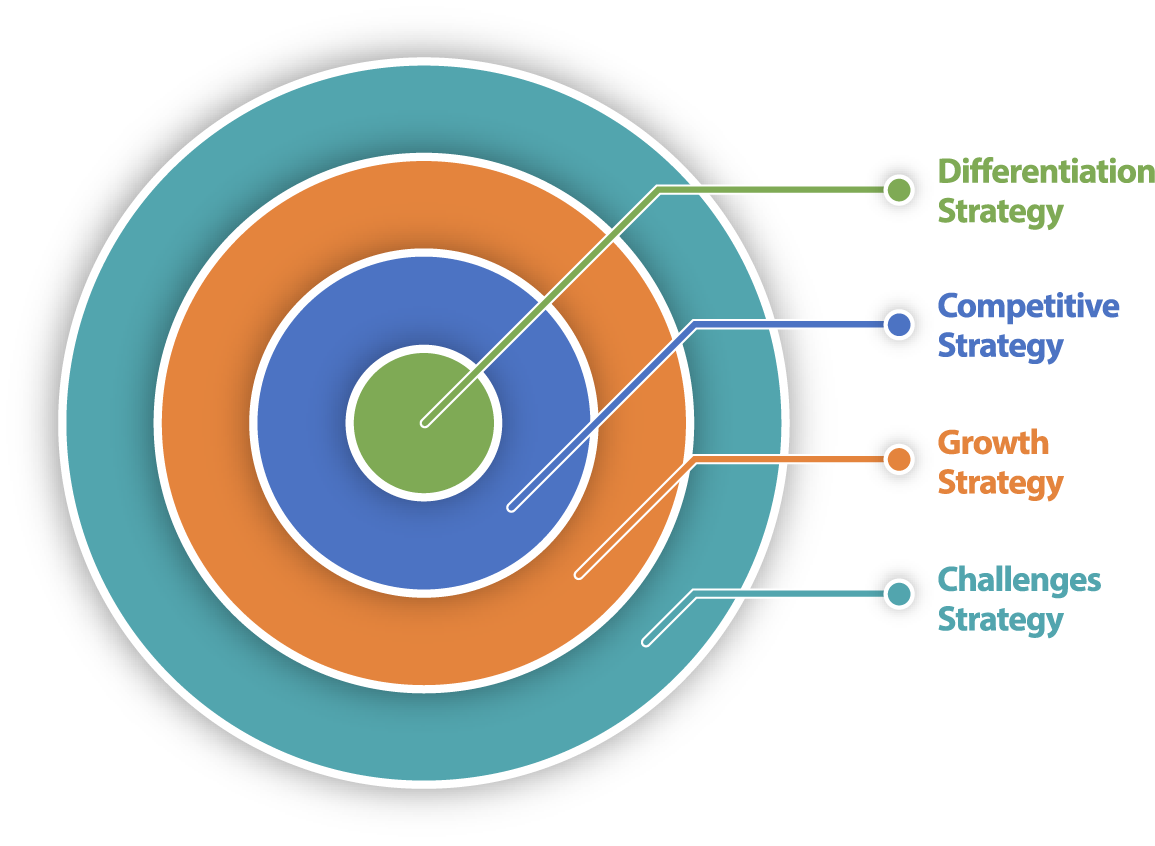
A differentiation strategy involves being different in a way that causes customers to prefer your offering to that of your competitors. A differentiation strategy is a kind of competitive strategy.
A competitive strategy is a way to capture customers that others are trying to capture at the same time. There are two kinds of competitive strategy. Differentiation is one. Being the low-price leader is the other. A competitive strategy is a kind of growth strategy.
A growth strategy is about growing your revenue. You can grow by having a superior competitive strategy, by expanding geographically, or by acquiring or merging with another organization. A growth strategy is one kind of challenges strategy.
A challenges strategy is a way to respond to the threats and opportunities (together, the challenges) facing your organization. A challenges strategy may involve one of the foregoing strategies.
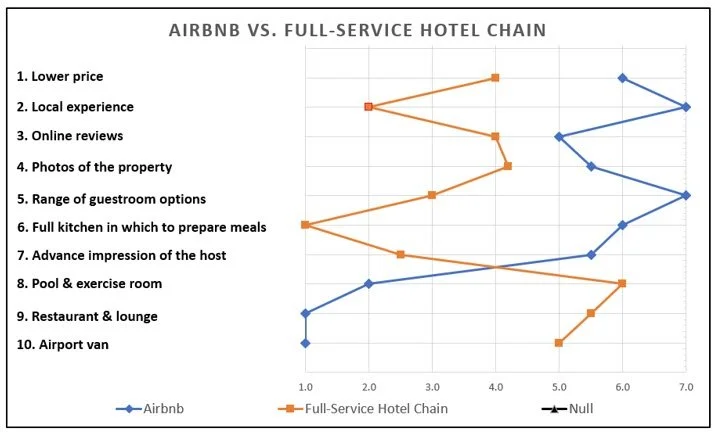
Sample strategy canvas

“We retained Kevin to facilitate a workshop guided by the framework in Differentiation Strategy: Winning Customers by Being Different. Our new strategy played a major role in growing our company from 60 hotels under management to more than a 100.”
John Hamilton, Executive Vice President, Pyramid Hotel Group

“Kevin facilitated a strategy workshop for our global professional association. It was the most insightful strategy session we’ve ever conducted..”
Patrick Farrey CEO, SPE
Challenges Strategy Labs
The fundamental responsibility of every board and management team is to know the key challenges facing their organization and to have a strategy for responding to them.
The challenges strategy process focuses on identifying the 2 -3 most important threats and opportunities (together, challenges) your organization is currently confronting and devising strategies to address them.
Research: I will review your previous strategic plans, individually interview selected members of the strategy team, prepare a summary report of the findings, and distribute the report prior to the workshop(s).
Key Challenges: The strategy team will work to pare down the list of challenges identified in the summary report to 10 to 12 well-defined key challenges.
Highest-Priority Challenges: The key challenges will be further reduced to the 2 to 3 highest priority challenges by identifying those that are both most important for you to address and that you are most able to make good progress on addressing during the next 18 - 36 months.
Strategies: Your team will develop a strategy for (i.e., a way of) surmounting each of the highest-priority challenges.
Action Plans: Your team will create high-level action plans for implementing each of the strategies.